Amazon Affiliate Disclaimer: This post may contain Amazon affiliate links which means we may receive a commission for purchases made through links.
Taekwondo is a dynamic and popular martial art that originated in Korea. With its emphasis on high kicks, fast-paced movements, and disciplined training, Taekwondo has captivated practitioners worldwide. In this article, we will delve into the rules and regulations of Taekwondo, providing a comprehensive understanding of this exciting martial art.
Introduction to Taekwondo
Taekwondo, which translates to “the way of the foot and fist,” is a martial art that focuses on both self-defense and personal development. It incorporates a variety of kicking and striking techniques, along with patterns of movement called “poomsae.” Taekwondo emphasizes mental discipline, respect, and physical fitness.
History of Taekwondo
Taekwondo traces its roots back over 2,000 years to ancient Korea. The martial art’s foundations were influenced by various Korean fighting styles and martial arts from neighboring countries. In the 20th century, Taekwondo underwent significant development and gained recognition as a global martial art.
Principles and Philosophy of Taekwondo
Central to Taekwondo are its principles and philosophy. Practitioners are guided by five tenets: courtesy, integrity, perseverance, self-control, and indomitable spirit. These principles shape the practitioner’s character and mindset, fostering respect, humility, and personal growth.
Belts and Ranking System
Taekwondo utilizes a belt ranking system to signify the practitioner’s level of skill and progress. The ranking system typically starts with a white belt and progresses through various colored belts, such as yellow, green, blue, red, and black. Each belt represents a different stage of proficiency and serves as a motivational tool for advancement.
Basic Rules and Equipment of Taekwondo
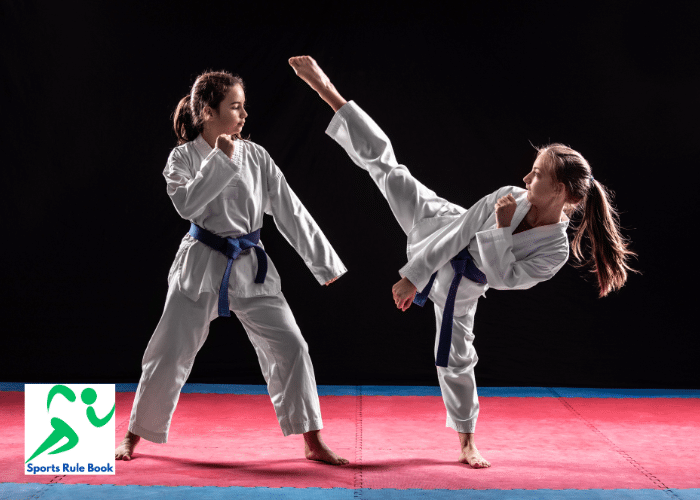
- Attire: Taekwondo practitioners wear a white uniform known as a “dobok” during training and competitions. The dobok consists of a jacket, pants, and a colored belt that corresponds to the practitioner’s rank.
- Protective Gear: During sparring sessions and competitions, practitioners are required to wear protective gear, including a headgear, chest protector, forearm guards, shin guards, and a mouthguard. These safety measures aim to minimize the risk of injury.
- Weight Classes: In competitive Taekwondo, weight classes ensure fair matchups between practitioners of similar size and weight. Weight divisions may vary depending on the competition or organization.
Scoring in Taekwondo
Taekwondo matches are scored based on various factors. Points are awarded for clean and well-executed kicks, strikes, and punches delivered to specific target areas. The scoring system considers the strength, accuracy, and technique of the attacks.
Taekwondo Techniques
Taekwondo encompasses a wide array of techniques that include offensive and defensive maneuvers. Let’s explore some of the key techniques used in this martial art:
Offensive Techniques
- Kicks: Taekwondo is renowned for its high, fast, and powerful kicks. Common kicks include front kick (ap chagi), roundhouse kick (dollyo chagi), side kick (yeop chagi), and back kick (dwi chagi).
- Strikes: Hand strikes, such as punches, knife-hand strikes, and elbow strikes, complement the kicking techniques in Taekwondo.
Defensive Techniques
- Blocks: Taekwondo practitioners employ various blocking techniques to defend against strikes and kicks. These techniques involve using arms, legs, and body movements to intercept and redirect incoming attacks.
- Evasion: Swift footwork and body movements enable practitioners to evade and avoid opponents’ attacks, creating openings for counter-attacks.
Sparring in Taekwondo
Sparring, or “kyorugi,” is a fundamental aspect of Taekwondo training. It involves controlled and supervised combat between practitioners, focusing on applying techniques and strategies in a simulated combat environment. Safety and respect for the opponent are paramount during sparring sessions.
Forms (Poomsae) in Taekwondo
Forms, known as “poomsae” in Taekwondo, are choreographed sequences of movements that simulate combat scenarios. Practitioners perform these patterns to demonstrate their proficiency in various techniques, stances, and transitions. Poomsae emphasize precision, balance, and fluidity.
Safety and Etiquette in Taekwondo
Taekwondo places great emphasis on safety and etiquette to ensure a respectful and disciplined training environment. Practitioners are expected to adhere to certain etiquette guidelines, which include bowing to instructors, showing respect to fellow practitioners, and following safety protocols during training and competitions.
Benefits of Practicing Taekwondo
Practicing Taekwondo offers numerous physical, mental, and emotional benefits. Some of the key advantages include:
- Improved fitness and cardiovascular health
- Increased flexibility, strength, and coordination
- Enhanced focus, discipline, and self-confidence
- Stress relief and improved mental well-being
- Opportunities for personal growth and character development
Training and Discipline in Taekwondo
Taekwondo training requires discipline, commitment, and perseverance. Practitioners engage in rigorous physical exercises, practice techniques, and undergo sparring sessions to refine their skills. Regular training builds stamina, agility, and mental fortitude.
Taekwondo Competitions
Taekwondo competitions provide practitioners with opportunities to showcase their skills and compete against others in a controlled environment. Competitions are organized at various levels, ranging from local tournaments to international championships. Participants are judged based on their technique, strategy, and overall performance.
Conclusion
Taekwondo is a dynamic martial art that combines physical prowess, mental discipline, and cultural heritage. Its rules and regulations govern training, sparring, and competitions, ensuring safety, fairness, and respect. By understanding the rules of Taekwondo, practitioners and enthusiasts can fully appreciate the artistry, athleticism, and personal growth it offers.
FAQs
1. Can anyone practice Taekwondo? Absolutely! Taekwondo is open to people of all ages and fitness levels. Whether you are a child, teenager, adult, or senior, you can benefit from practicing Taekwondo.
2. Is Taekwondo only about fighting? No, Taekwondo encompasses much more than just fighting. It emphasizes self-discipline, respect, and personal development, in addition to physical techniques.
3. Are there different styles of Taekwondo? Yes, there are different styles and organizations within the Taekwondo community. The most widely recognized styles are the World Taekwondo Federation (WTF) style and the International Taekwon-Do Federation (ITF) style.
4. How long does it take to earn a black belt in Taekwondo? The time it takes to earn a black belt varies depending on individual dedication, training frequency, and the specific requirements of the Taekwondo school or organization. It typically takes several years of consistent training and effort.
5. Is Taekwondo an Olympic sport? Yes, Taekwondo became an official Olympic sport in the year 2000. It is featured in both sparring (kyorugi) and forms (poomsae) events in the Olympic Games.